
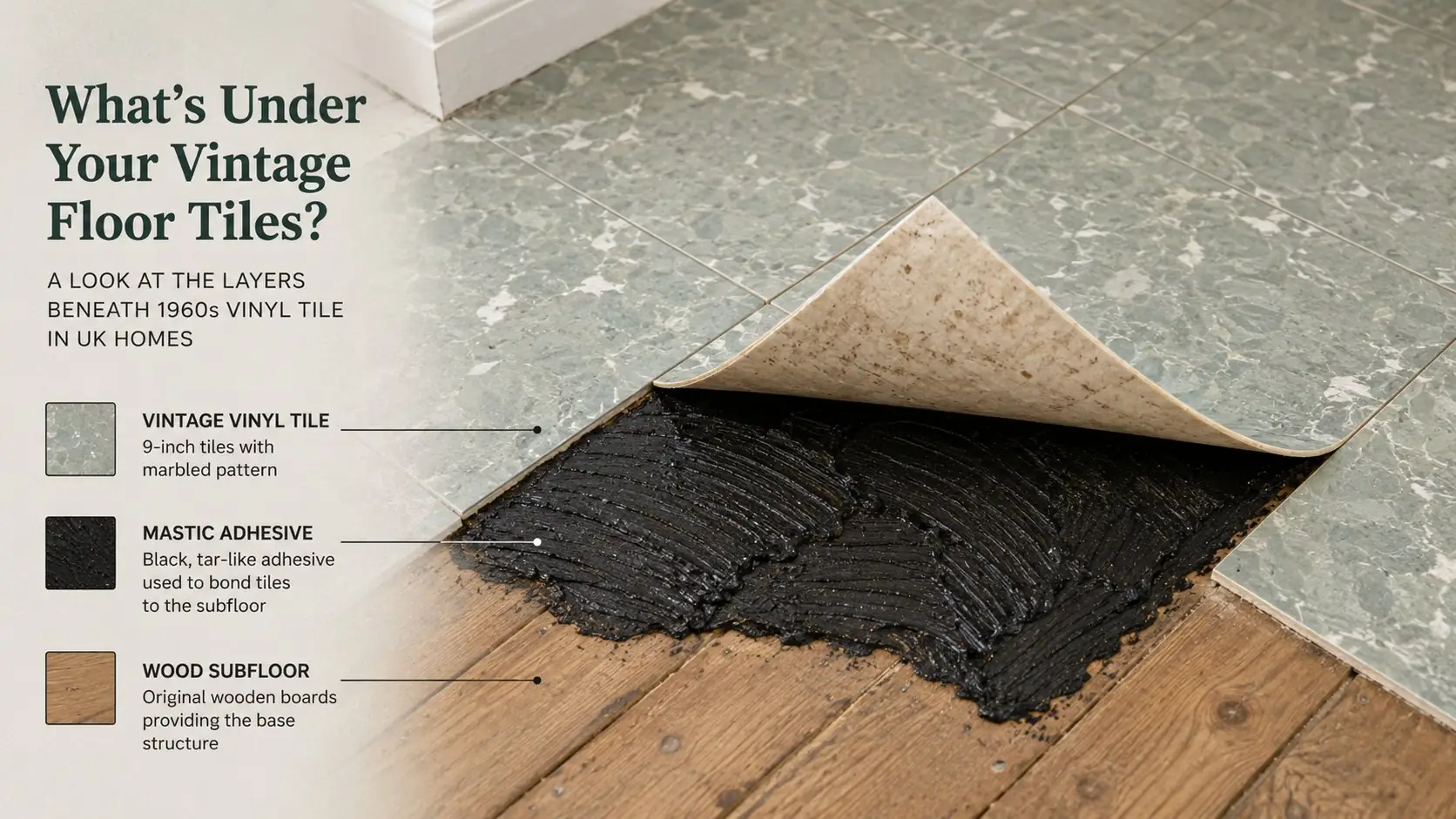
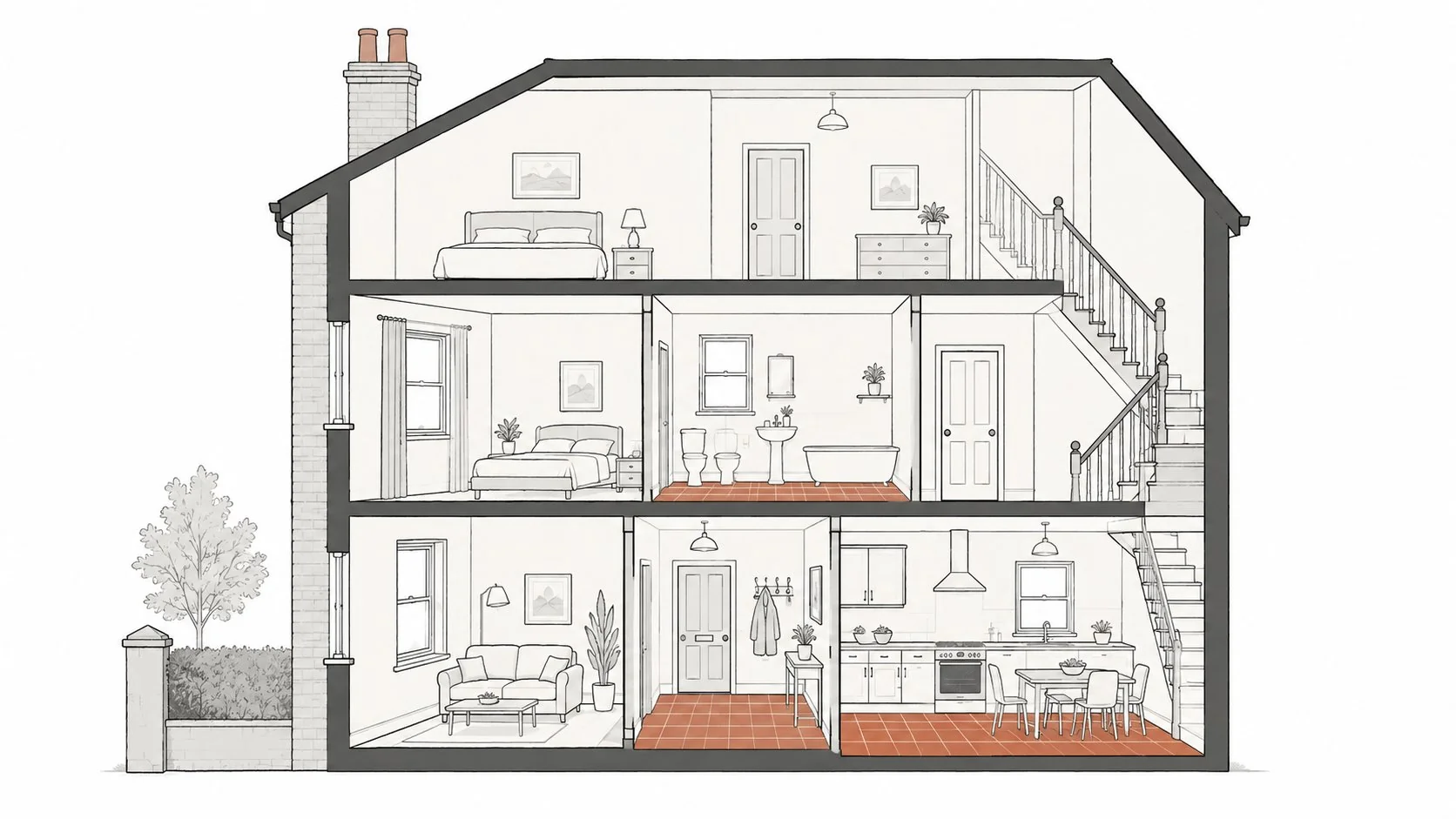
Older vinyl and thermoplastic floor tiles, their backing and the adhesive below can contain asbestos. Intact, firmly bonded flooring is generally lower risk than friable insulation, but cutting, abrasion or removal can release fibres. Assess the whole floor system before disturbing it.
This guide explains the clues that may raise suspicion, why size or brand cannot identify asbestos, and how to arrange safe assessment and management.
Why floor tiles so often contained asbestos
Asbestos was used to reinforce flooring products. HSE’s historical survey guide distinguishes thermoplastic tiles containing up to 25% asbestos from PVC vinyl tiles normally containing about 7% chrysotile. These descriptions do not establish the contents of any particular floor.
Asbestos flooring and adhesives can remain in older buildings. Do not rely on an assumed production or installation cut-off to decide that a particular layer is asbestos-free.

How to recognise asbestos floor tiles
Age, dimensions, appearance and construction records can raise suspicion, but they cannot establish a reliable probability or confirm composition. Do not lift or break tiles to inspect them; arrange competent assessment where needed.
Building age. HSE advises caution in buildings constructed before 2000. Later refurbishments may retain older flooring beneath a new covering; records must relate to the actual layer being considered.
Tile size. Nine-inch tiles can contain asbestos, but so can other dimensions. Size is not a date stamp or a reliable identification test.
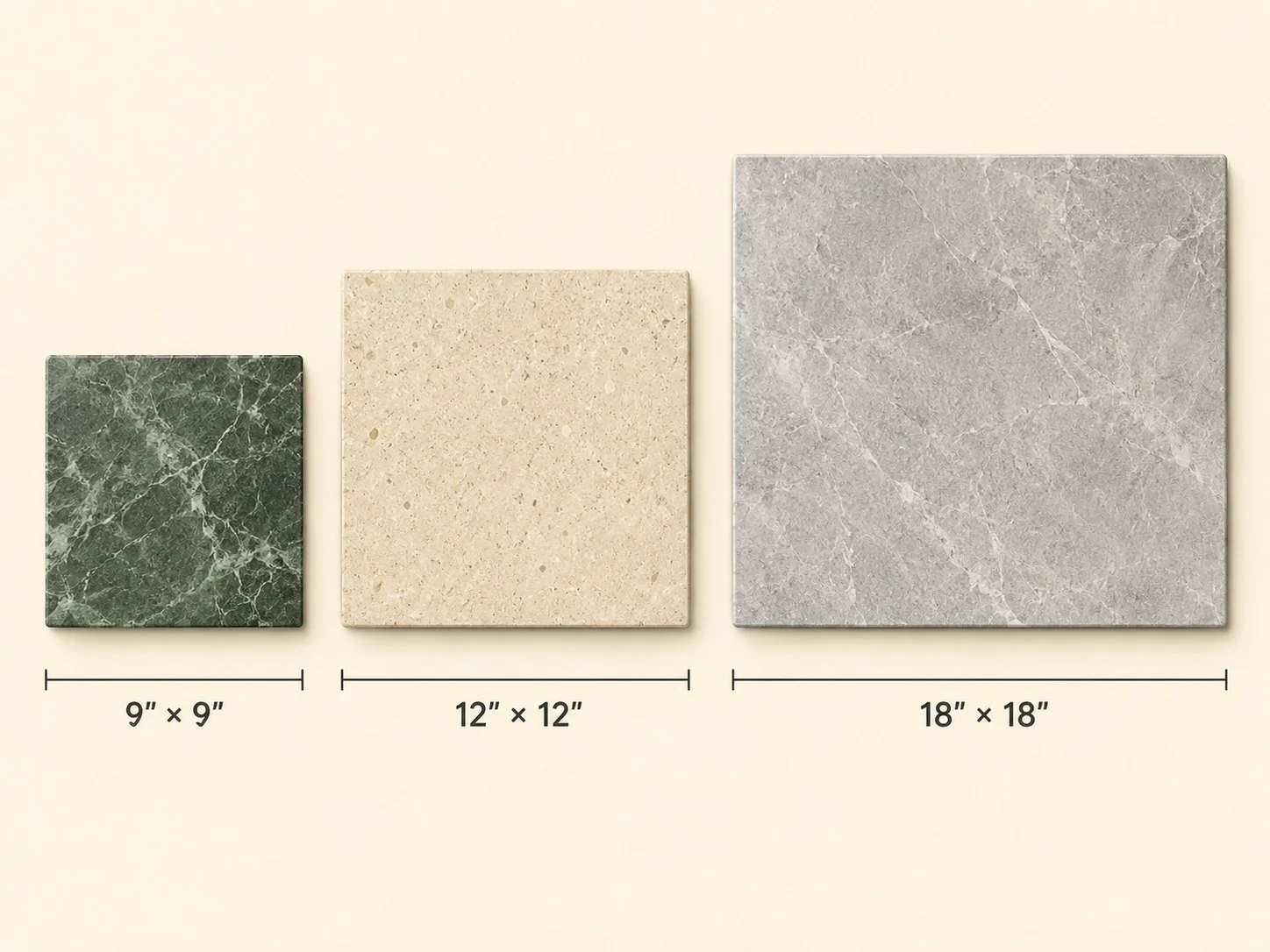
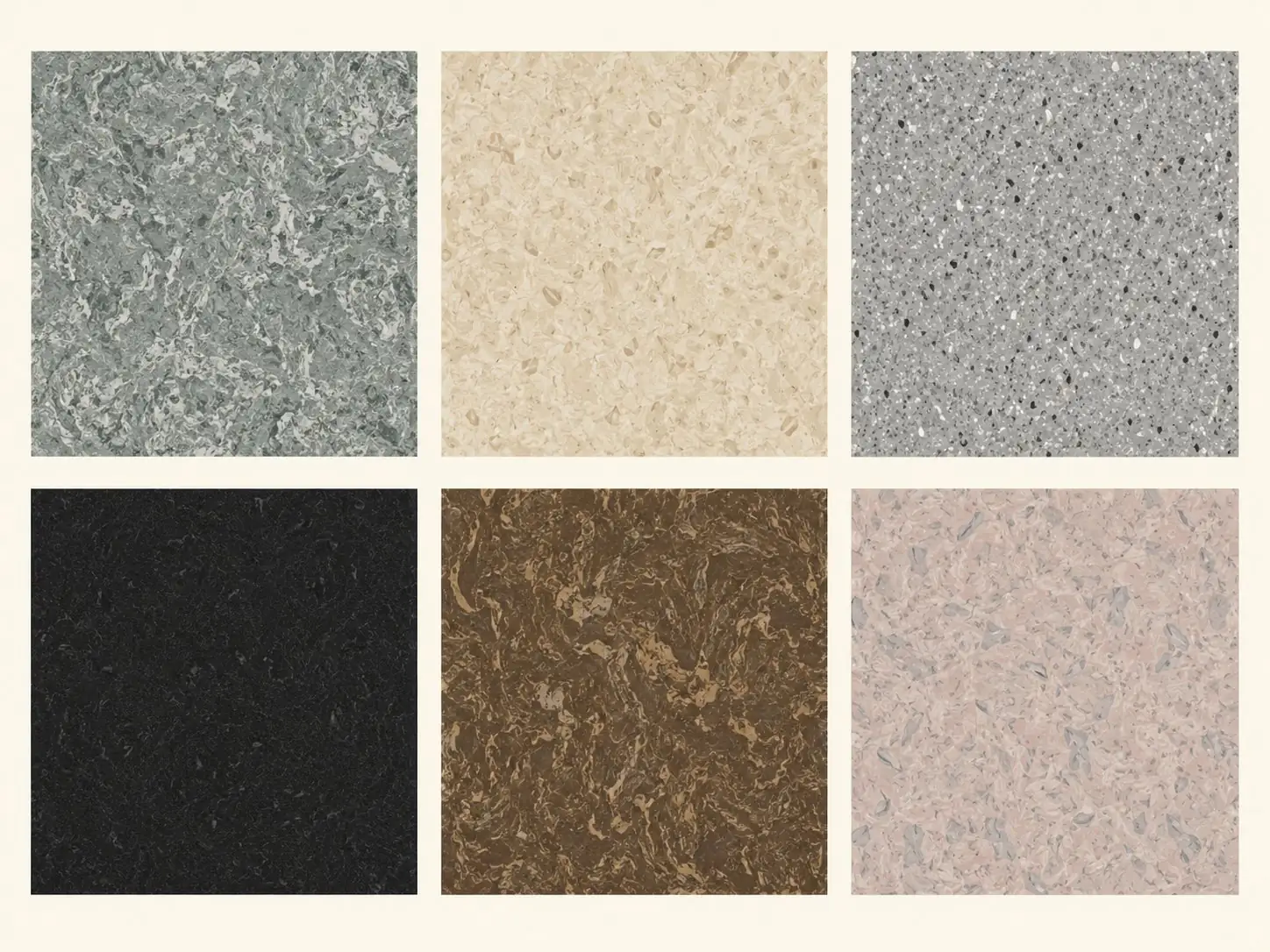
Appearance. Tiles may be marbled, mottled, plain or patterned in many colours. Asbestos-free products can look similar. Do not bend, snap or scrape a tile to test its properties.

Underlying layers. Adhesive, backing and other layers may need assessment separately from the tile. Do not lift the floor merely to inspect them without suitable precautions.
The 9-inch tile: a clue, not identification
A nine-inch square does not prove asbestos content or manufacturing date. Treat suspect older flooring cautiously and use reliable product records or appropriate analysis.
Modern reproductions and old tiles can have similar dimensions and patterns. The composition of the actual material matters more than its style or the age of the room.
Dark asphalt or thermoplastic tiles may contain asbestos, but colour, thickness or rigidity cannot confirm it. Do not test stiffness by bending or breaking a tile.
The black mastic adhesive trap
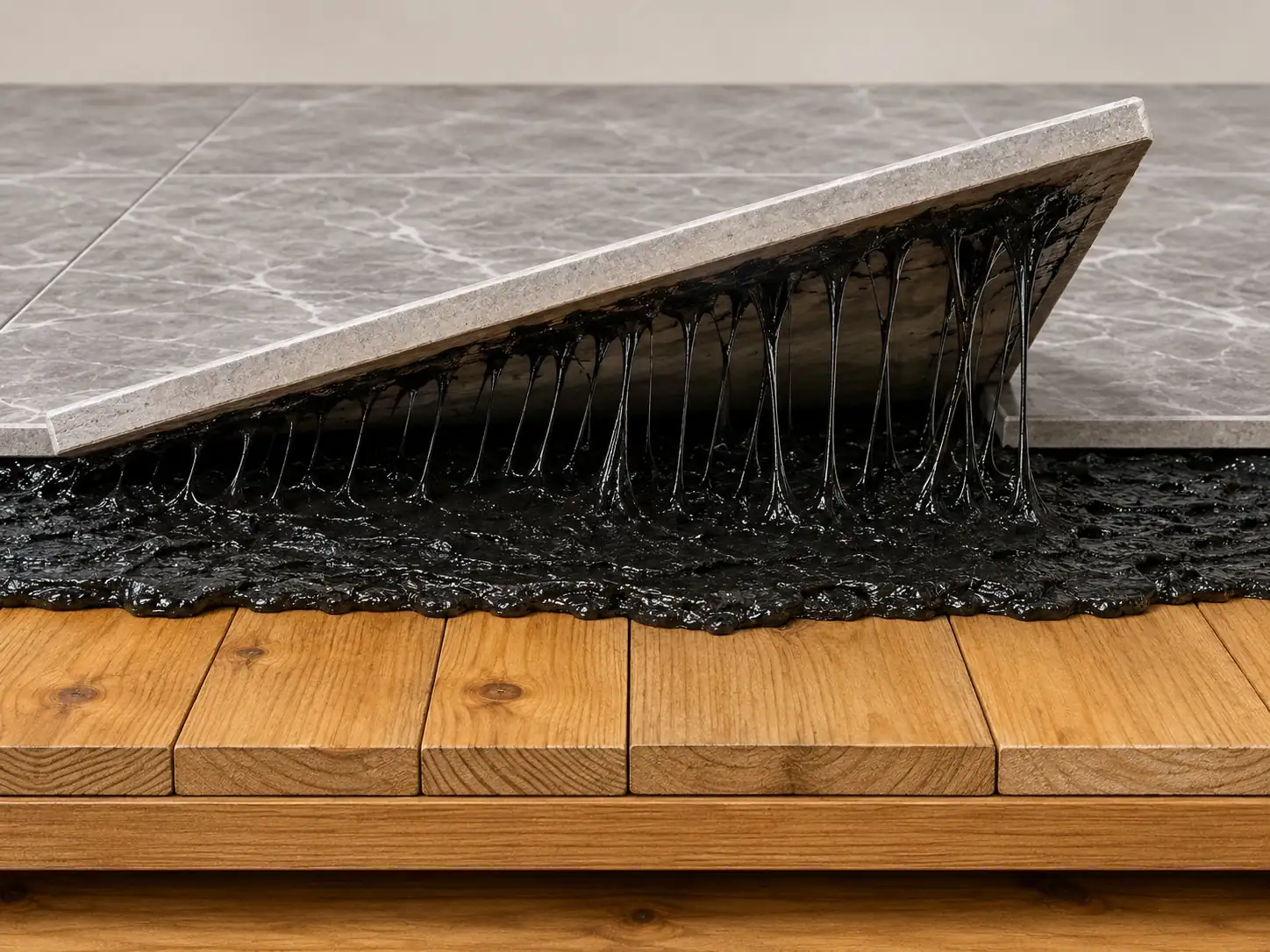
A negative tile result does not establish that the adhesive is asbestos-free. Older bituminous mastics can contain asbestos and should be included in the assessment when they may be disturbed.
Black adhesive is a reason to investigate, not proof of asbestos. Sanding or grinding suspect flooring residue can release fibres; HSE’s flooring guidance says never to sand the floor.
Where the assessment permits, leaving or overlaying sound flooring can avoid removal. Confirm that the chosen system will not disturb the underlying materials, record what remains and inform future workers.
The paper-backed tile trap
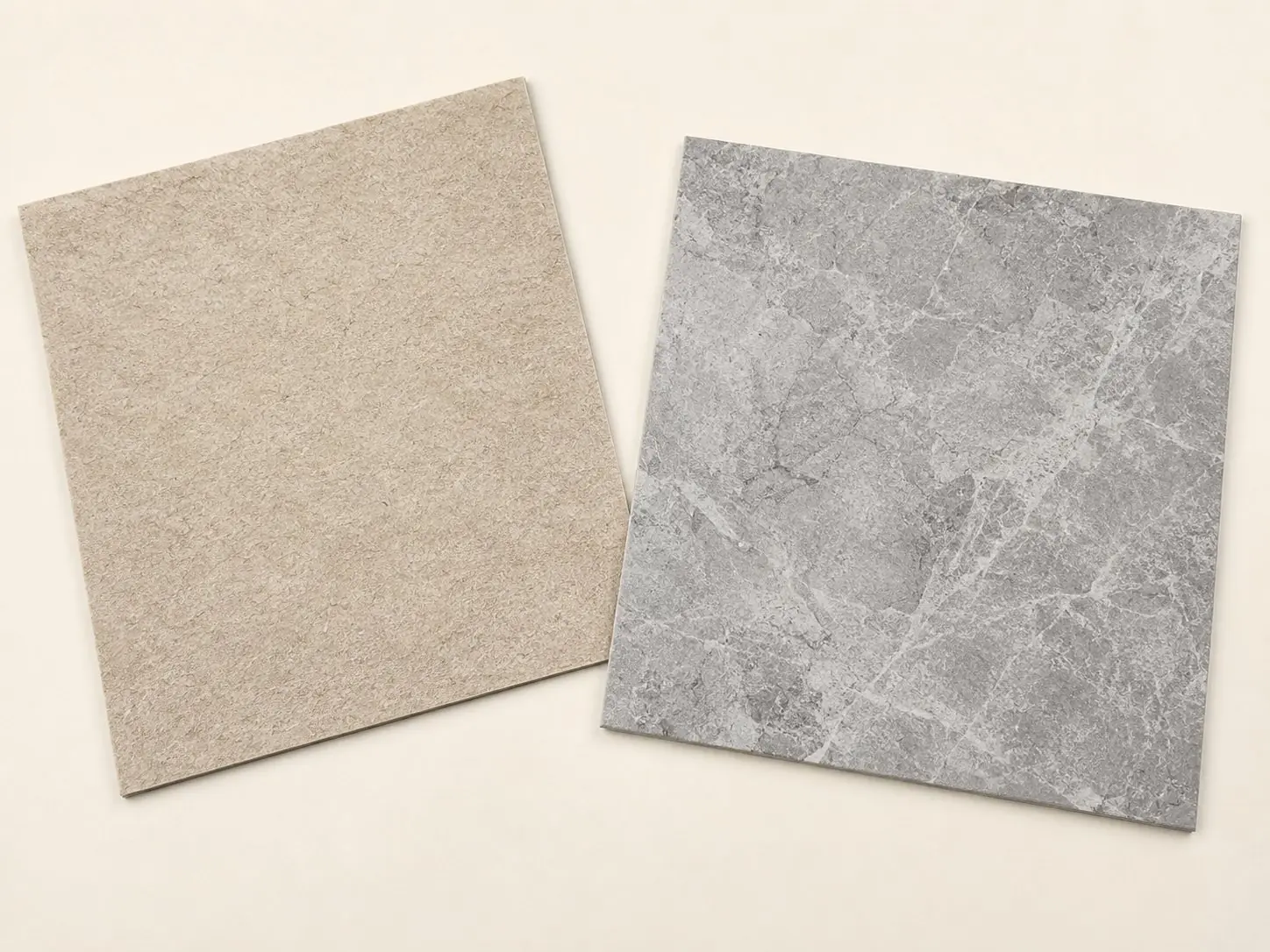
Some flooring includes asbestos-paper backing, which can be much less firmly bound than the tile. HSE specifically addresses this in its floor-tile guidance; do not lift tiles yourself to check the backing.
HSE’s A23 guidance classifies removal of floor tiles with asbestos-paper backing as NNLW. Other tile work must also be assessed for its material, condition and method; “non-licensed” does not mean untrained or uncontrolled.
If you're a homeowner planning to engage a contractor, ask them directly whether they're carrying out the work as non-licensed or NNLW. If they look blank, find someone else.
A note on Marley floor tiles
A manufacturer or brand name may help locate product records, but neither a brand nor a production date confirms the composition of a particular floor. Use competent assessment and appropriate analysis where needed before disturbing suspect tiles or adhesive.
A manufacturer’s name alone does not establish composition. Product records and competent sampling, where needed, are more reliable than a brand, tile size or assumed installation date.
The same applies to other period brands you might find marked or stamped on tiles: the brand is a clue, not a verdict.
Are asbestos floor tiles dangerous if left alone?
Intact, firmly bonded tiles unlikely to be disturbed can often be left in place and managed. Check their condition and future work; a covering does not make the asbestos disappear or guarantee that it will never be disturbed.
The risk comes from disturbance — and the typical disturbance scenarios are predictable. Lifting and breaking tiles during renovation. Sanding the floor before laying laminate. Cutting tiles with a power saw to fit a pipe run. Sweeping up tile dust dry rather than wet. A flood or fire that damages the tiles. Each of those activities can release fibres at levels that warrant proper precautions.
Leaving sound flooring in place can be an appropriate option after assessment. Keep a record of the retained material and consider any work needed to install or maintain the new covering.
Can I remove asbestos floor tiles myself?
This is the most-asked question on the topic, and the answer has two layers.
The duty to manage under regulation 4 does not apply inside an individual private home, but that is not a blanket exemption from every asbestos, waste or safety requirement. Contractors working in homes have relevant duties, and the work category must be assessed.
Awareness training alone is insufficient for removal. The task needs appropriate competence, controls, equipment, decontamination and lawful disposal. A short list of PPE or wet methods is not a complete removal procedure.
For most people, the realistic options are:
- Consider leaving or overlaying sound material where a competent assessment shows this is suitable
- Obtain a quotation from a competent contractor covering identification, controls, clean-up and waste disposal
- Do not begin DIY removal on the strength of a web guide or awareness certificate; obtain competent advice on the actual materials and work
Tell the contractor about possible backing and adhesive layers so the correct work category and precautions can be established before starting.
How to dispose of asbestos floor tiles
Do not put asbestos waste in ordinary household refuse. Waste rules and household collection arrangements differ across the UK; ask the local council or an authorised waste service before moving it.
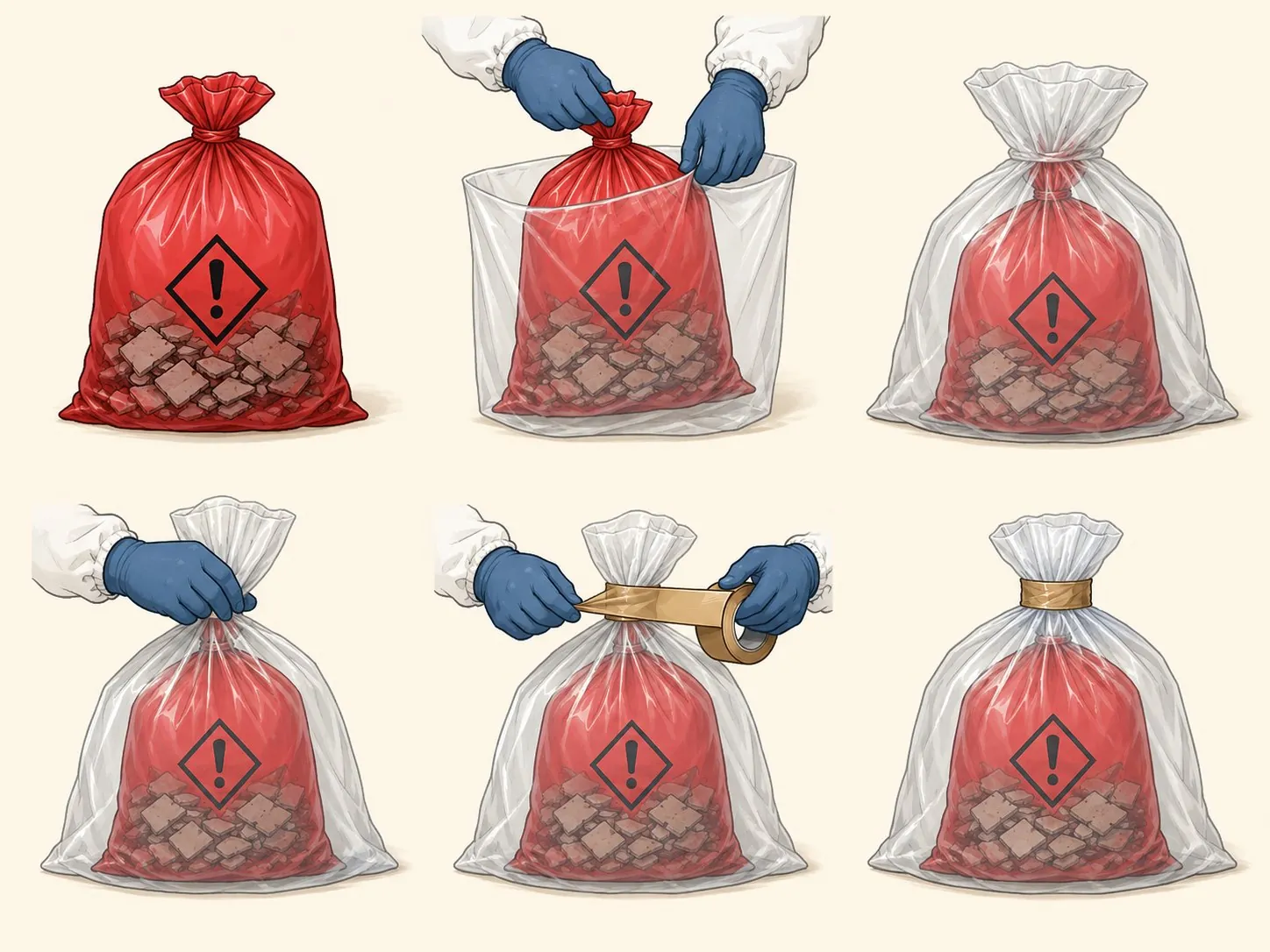
Asbestos waste needs suitable sealed, labelled packaging. HSE’s task guidance uses an asbestos-waste bag inside a clear outer bag for relevant debris. Do not break intact tiles to make them fit, and confirm the receiving facility’s requirements.
Use an appropriately registered waste carrier and an authorised receiving facility where required, with the correct consignment documentation for the jurisdiction and waste. Ask the contractor to explain and document the disposal route.
Frequently asked questions
Are 12-inch and 18-inch tiles also potentially asbestos?
Yes. Asbestos can occur in different tile sizes. Dimensions alone neither confirm nor exclude asbestos, and inch sizes should not be treated as exact metric equivalents.
Can asbestos floor tiles be sealed instead of removed?
Yes, encapsulation is a legitimate management approach. New flooring laid over a stable asbestos tile floor is one of the most common solutions, and it's consistent with HSE guidance on managing asbestos in non-domestic premises.
Is the black mastic under my floor more dangerous than the tile?
There is no reliable general ranking from appearance. Both tile and adhesive may need assessment, and sanding or grinding residue can create substantial exposure. Do not assume either layer is safe from a result on the other.
Do modern floor tiles ever contain asbestos?
New asbestos-containing flooring is prohibited, but the age of a building or recent surface refurbishment does not rule out older retained materials. Establish the contents of the layer affected by the work.
How much does professional removal cost?
There is no reliable national price for a particular floor area. Obtain written quotations based on materials, condition, access, work category, clean-up and disposal; compare the scope as well as the total.
Can I lay new flooring directly over asbestos tiles?
Overlaying can avoid removal where the floor and proposed installation are suitable. It does not eliminate future disturbance risk: record the retained material and avoid drilling, sanding or other damaging preparation.
Asbestos floor tiles are one of the more manageable categories of asbestos material you're likely to find in a UK home. If you'd like to understand the wider picture — where else asbestos appears in pre-2000 buildings, what the legal duties are, and what training is required for tradespeople who work in these properties — our complete guide to asbestos awareness in the UK brings the topic together. For tradespeople and supervisors who need formal training, our Asbestos Awareness Course covers the core syllabus required under Regulation 10 of the Control of Asbestos Regulations 2012.
Related guides
- Asbestos awareness: the complete UK guide
- Asbestos-containing materials in UK buildings: a reference guide
- What does asbestos look like?
Sources & references
- HSE A23 — flooring, paper backing, overlaying and no sanding
- HSE HSG264 — historical flooring composition and identification
- HSE — non-licensed and notifiable work
- HSE — managing retained materials
- HSE — asbestos in homes and disposal
- HSE EM9 — asbestos waste disposal
Need formal asbestos awareness training for your team?
Explore the Asbestos Awareness Course →
Mark writes about workplace health & safety, asbestos awareness and accredited online training for Asbestos Awareness Course, part of Online CPD Academy.